
It may surprise you, but almost 25% of homes in Ventura County use septic systems. This makes regular septic maintenance critical for the community. Trust Septic Services of LA for reliable septic pumping in Santa Paula. Our team focuses on maintaining septic systems throughout Ventura County. We provide services including pumping, cleaning, inspections, and more.
Visit website of Septic Tank Services Santa Paula
Learn what professional septic tank pumping in Ventura County entails here. Understand why regular maintenance can save money. Plus, you can recognize early signs of trouble before they escalate.
Why Regular Septic Pumping Matters For Santa Paula Homeowners
In Santa Paula, especially in less urban areas, homes often use septic systems for wastewater. Understanding these systems is crucial for homeowners. A septic tank separates waste: solids settle, scum rises, and the clean effluent goes to a leach field. In that area, soil further treats the effluent.
Over time, solids build up in the tank. Without regular cleanings, tanks get full, decreasing their efficiency. Effluent filters help by catching solids, but they must be cleaned regularly. If solids reach the drain field, it can lead to clogged pipes and soil, which decreases water treatment efficiency.
Not keeping up with septic maintenance has real risks. Full tanks can slow down drains, cause toilets to back up, and disrupt daily activities. A strong smell in the yard often suggests a failing system or a waterlogged drain field. Moreover, there’s a threat of contaminating groundwater with harmful substances, which is a significant issue for Ventura County, which depends on a clean water supply.
Below is a brief overview comparing the issues and solutions to manage septic system risks faced by Ventura County’s residents.
| Issue | What Happens | Preventive Action |
|---|---|---|
| Solid buildup | Less tank capacity and carryover into the drain field | Routine pumping every 3–5 years based on household use |
| Restricted drain field | Poor percolation, soggy patches, strong odors | Control water usage and check filters regularly |
| Indoor plumbing backups | Indoor sewage backups and health hazards | Timely pumping and immediate repairs |
| Contamination of groundwater | Bacteria and nitrates reaching well water | Regular septic maintenance Santa Paula and inspections |
A septic system that’s well cared for can last 20–30 years. Regular pumping, inspections, and cleaning of effluent filters are key. These actions, along with quick repairs, not only prolong a system’s lifespan but also safeguard property values and reduce the risk of costly emergencies.
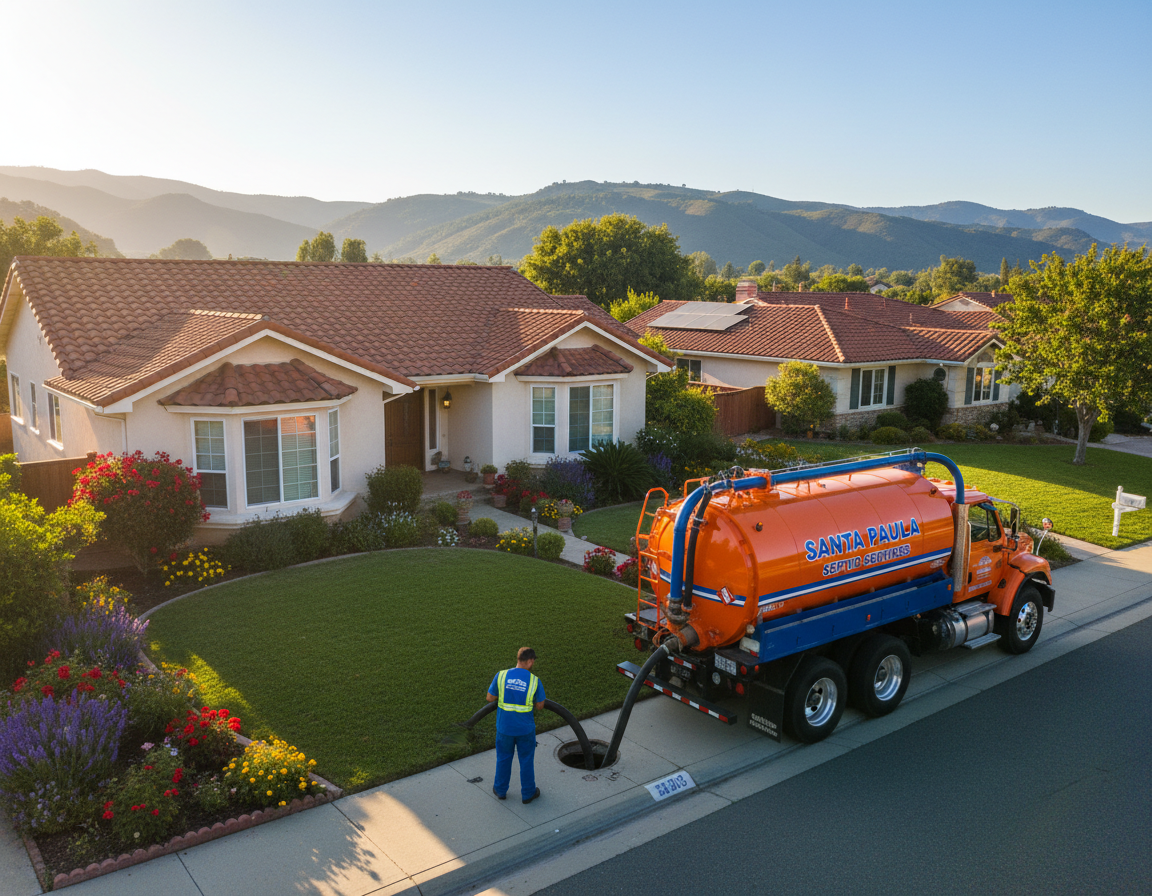
Septic Pumping Santa Paula
Consistent servicing is necessary for optimal system performance and to avoid expensive repairs. At Septic Services of LA, every visit to a Santa Paula home is executed with a safety-first approach. Our technicians commence with an in-depth inspection. They determine tank levels and inspect components before starting the actual work.
What Happens During A Professional Pumping Visit By Septic Services Of LA
Our experts first locate your tank and uncover the lid, utilizing risers if available. They then ensure safe opening of the tank. A high-powered vacuum truck is employed to evacuate liquid, scum, and sludge within reach. All removed material is transported to officially sanctioned treatment facilities, adhering to California’s strict regulations.
The primary goal of pumping is to clear out the tank’s contents. However, cleaning delves further, incorporating pressure washing of the tank’s interior walls and eliminating tightly packed sludge when necessary. Post-pumping, our technician conducts a meticulous inspection. They then offer a detailed report, highlighting observations and suggesting any required actions.
Recommended Pumping Frequency For Santa Paula Homes (3–5 Years Guideline)
It’s advised to schedule your pumping services every 3 to 5 years. Pre-pumping inspections pinpoint your specific needs. This routine check allows Septic Services of LA to craft a maintenance timeline. One that prevents unpleasant backups and promotes longevity of your tank.
Factors That Change Pumping Intervals: Household Size, Water Use, Septic Type
Various elements can necessitate more frequent servicing. Increased solids find their way into the tank in larger homes or with heightened daily water usage. The utilization of garbage disposals, hosting numerous guests, or owning a hot tub also adds more solids and liquid volume to the system.
Different system configurations play a role too. For example, smaller tanks, cesspools, and setups dealing with heavier solid loads often need sooner servicing. The condition of effluent filters, the presence of risers, and baffle integrity all influence both the servicing process and how often pumping is needed. Our technicians evaluate these factors, advising on service intervals tailored to your household’s usage and system design.
Septic Services Of LA: Local Knowledge And Service Offerings
Septic Services of LA delivers specialized support for septic systems to California homeowners. This company combines local know-how with deep knowledge of Ventura County’s soil and codes. For those in search of a dependable septic company in Santa Paula, its technicians offer expertise on regional challenges and environmental concerns.
Licensed technicians employ advanced tools like vacuum trucks and hydro-jetters, alongside inspection cameras. They provide detailed inspection reports and adhere to documented disposal methods. Such measures showcase the standards California’s septic experts follow, safeguarding properties and waterways.
Business Profile And Qualifications
Septic Services of LA specializes in septic tank services including pumping, cleaning, inspecting, repairing, installing, and maintenance. The team’s state licenses and compliance with local permits minimize repair and permit-related delays. They’re well-versed in Ventura County’s specific regulations.
Core Services Offered
The company’s services range from septic tank pumping to cleaning, installing, and repairing. They handle camera inspections and drain field repairs. Additionally, they offer effluent filter and baffle repairs, along with riser and lid replacements. Services extend to leak detection and sewage pump services, highlighting their comprehensive offerings.
They also provide system design and expansion advice, aiming to enhance system longevity and ensure local compliance. This positions Septic Services of LA as a go-to for full-service septic solutions for both homeowners and property managers.
Rapid Response And Availability
In emergencies, such as backups or overflows, the company offers rapid response. Their goal is to lessen both property damage and environmental harm. Their 24/7 availability is in line with California’s emergency service standards.
Upon receiving an urgent service request, teams quickly evaluate the situation, secure the site, and propose repair solutions. Customers get detailed estimates and reports post-emergency, aiding in insurance processes and regulatory compliance.
| Service Category | Typical Tasks | Benefit to Homeowners |
|---|---|---|
| Pumping & Cleaning | Tank pumping, sludge removal, effluent filter cleaning | Helps prevent backups and extends tank life |
| Diagnostic Inspections | Camera checks, flow testing, and soil analysis | Early detection of blockages and structural issues |
| Repair & Replacement | Baffle repairs, riser/lid replacement, and drain field corrections | Boosts performance and avoids expensive failures |
| Design And Expansion | Design work, expansion planning, and permits | Facilitates property improvements and ensures compliance |
| Urgent Services | 24/7 response, overflow control, temporary fixes | Minimizes property and environmental damage |
A Step-By-Step Look At The Septic Tank Pumping And Cleaning Process
The septic tank pumping process starts with a site review. Technicians locate the tank using maps or probes, then expose the access points. They suggest replacing the tank access risers lid if it’s cracked or too deep. This allows for safer, routine service.
How The Tank Is Located And Accessed Safely
Before digging, teams verify the tank’s position. They then uncover lids and check the cover and nearby soil. Installing risers makes future visits quicker and less disruptive. Replacing damaged lids enhances safety and adheres to local codes.
Pumping Equipment Used And Vacuum Hauling Procedures
High-powered vacuum trucks are used to remove liquids, scum, and loose solids. Crews adhere to meticulous hose and suction practices to avoid spills. They transport the collected material to permitted treatment sites, following California regulations.
Tank Wall Cleaning, Sludge Removal, And Post-Pump Inspection
Technicians clean the tank’s internal walls with brushes or pressure-washing to remove remaining sludge. This step eliminates settled solids, improving tank capacity and preventing solids from reaching the drain field. They also service effluent filters as necessary.
After cleaning, they perform a thorough inspection. This includes checking baffles, inlet and outlet conditions, and tank integrity. Their findings are documented, with recommendations for riser installations, lid repairs, or further septic cleaning services in Santa Paula noted.
- Find the tank, expose the lids, and suggest risers plus lid replacement.
- Use vacuum trucks while following safe suction and hose-handling practices.
- Move septage to approved facilities through vacuum hauling septage.
- Brush the walls, extract sludge, and clean effluent filters.
- Inspect baffles, outlets, and structural condition; document everything and recommend follow-up.
Septic Inspection And Diagnostic Methods Used In Santa Paula
Effective diagnosis can save both time and money when facing septic system trouble. In Santa Paula, septic inspection teams employ a combination of visual examinations and sophisticated tests to pinpoint problems. These detailed reports are crucial for home sales, insurance claims, and adhering to Ventura County’s health regulations.
The process starts with a comprehensive site walkthrough and accessing the tank. Technicians search for signs of malfunction such as wet areas, odors, or atypical plant growth. Initial observations determine the subsequent use of diagnostic technology.
Using Camera Inspections To Find Blockages Or Structural Damage
Real-time video from sewer and pipeline cameras helps investigate the condition of inlet and outlet pipes. This thorough camera inspection can reveal issues like root invasions, fractures, collapsed sections, and major blockages. The footage assists in choosing the most suitable repair approach and is archived for both client and regulatory use.
Flow Tests, Soil Testing, And Effluent Filter Inspections
To check drain field efficiency, flow testing simulates effluent movement under controlled scenarios. The results help assess distribution uniformity and potential overloads. Examining soil and percolation rates identifies overly saturated areas.
Inspecting the effluent filter for blockages is key to maintaining flow. Consistent checks and cleanings help prevent solids from reaching the leach field, thus prolonging the system’s lifespan. The condition of filters is recorded, with any necessary replacements or cleanings done immediately.
When Septic Services Of LA Advises Repairs, Replacement, Or Upgrades
The advice given post-inspection varies based on identified issues. Solutions may range from simple baffle replacements to extensive repairs like fixing risers or patches in pipes. Severe structural concerns or outdated systems might require complete overhauls or capacity increases. Implementing upgrades such as aeration systems enhances functionality, especially in homes facing heavy demand.
| Diagnostic Tool | Primary Purpose | Typical Outcome | Documentation Provided |
|---|---|---|---|
| Pipe Camera | Find blockages, roots, and cracks | Focused repair plan or trenchless solution | Recorded video file plus inspection log |
| Flow Testing | Check effluent distribution and drain field capacity | Adjustments to dosing, redesign, or expansion | Flow rate report with recommendations |
| Percolation/Soil Test | Assess leach field absorption and saturation | Repair, reserve area plan, or new field design | Percolation report and site map |
| Effluent Filter Review | Detect and remove clogging solids | Filter service or replacement; reduced risk to the leach field | Filter status note and service record |
| Tank Visual Inspection | Inspect baffles, walls, and liquid levels | Small repairs or recommendation to pump or replace | Inspection record plus photos |
Signs Your Septic System Needs Professional Service
If your home’s plumbing acts up, it could mean trouble with your septic system. Identifying signs of trouble in Santa Paula can save you from expensive repairs and keep local water sources safe. When you spot several of these indicators, contacting a reliable service like Septic Services of LA is crucial.
Slow Drains, Gurgling Pipes, And Backing-Up Toilets
When multiple fixtures drain slowly, your system may be struggling to process wastewater. Gurgling sounds or bubbles in toilets when running water signal common backup issues. If your toilet frequently backs up, it could mean a full tank or a clog in the system.
Unpleasant Odors Near The Drain Field Or Tank
A strong sewage smell around your tank or yard hints at leaks or effluent surfacing. Indoor odors could indicate venting failures, clogs, or an overburdened system. These persistent smells often lead to necessary system inspections, resulting in repairs or pumping.
Wet Spots Or Lush Vegetation Over The Leach Field Indicating Failure
Soggy areas, puddles, or overly green grass on the leach field suggest a failure. This vegetation implies nutrients from effluent are leaking out, which could pollute groundwater. Such signs demand immediate action to avoid environmental harm.
Noticing septic issues in conjunction with yard or odor problems means it’s time for a professional check. Septic Services of LA can assess your system, handle emergencies, and suggest solutions to safeguard your home and the planet.
Maintenance Tips To Extend Your Septic System’s Life
Steady care and simple habits are essential for a healthy septic system in Santa Paula. These practices reduce repair needs and help protect the drain field.
Water-Saving Habits And Appliance Choices
Conserving water lessens the load on your septic tank and leach field. Installing low-flow toilets and showerheads, and choosing ENERGY STAR appliances are smart moves. Promptly fix leaks and spread out laundry throughout the week.
Lowering water usage at peak times ensures better solids separation in the tank. It also prevents the drain field from clogging. Even small upgrades can significantly enhance your system’s efficiency over time.
What To Avoid Flushing And Everyday Precautions
It’s crucial to know what should never go into your septic system. Wipes, even if “flushable”, feminine products, paper towels, and dental floss should not be flushed. Avoid introducing grease, cooking oil, paints, solvents, or medications into any drains.
Such items can block your pipes, kill beneficial bacteria, and accelerate your septic system’s degradation. Utilizing garbage cans for disposal and having a plan for medicine take-back can mitigate these risks.
Routine Inspections, Risers, And Effluent Filter Maintenance
Having your system inspected and pumped by professionals every 3–5 years is a good practice. During these visits, ensure they check risers and lids for secure access and assess the tank’s condition.
Maintaining your effluent filter is also critical. It should be cleaned or replaced during service visits to prevent solids from entering the drain field. This maintenance step is a preventative measure against blockages and expensive repairs.
Landscape And Recordkeeping Tips
To safeguard your drain field, keep vehicles, heavy equipment, and structures away. Only plant grasses or shrubs with shallow roots far from septic components to avoid root intrusion.
It’s vital to keep detailed maintenance records, including receipts and dates of service. These documents are invaluable for future inspections, property transfers, and planning any necessary repairs or system upgrades.
Environmental Benefits Of Routine Septic Pumping
Regular septic pumping has clear environmental upsides. It prevents the build-up of solids in tanks that lead to system failure. This essential maintenance reduces the likelihood of untreated waste contaminating soil and water sources nearby.
Preventing Soil And Groundwater Contamination In Ventura County
Timely septic service in Ventura County safeguards groundwater used for drinking and agriculture. Pumping tanks as needed minimizes the chance of system collapse. This care ensures that harmful pollutants are less likely to seep into drinking wells and aquifers.
How Proper Waste Handling Protects Local Waterways And Public Health
Septic overflows and field failures threaten rivers, creeks, and oceans with harmful bacteria and nutrients. Routine pumping mitigates these risks. It plays a vital role in preserving the health of aquatic ecosystems and ensuring the safety of water-based recreation areas for the public.
How Professional Disposal And Treatment Of Septage Reduces Environmental Impact
Licensed professionals transport waste to approved facilities for treatment, adhering to state regulations. Opting for expert service guarantees compliance with California’s disposal laws. This approach drastically cuts the pollution linked to unlawful dumpings, like illegal disposal or incorrect handling on properties.
Utilizing certified technicians for septic maintenance aligns with California’s environmental policies. It helps homeowners avoid penalties and supports the preservation of regional soil and water integrity over time.
Costs, Discounts, And What To Expect From Service Pricing
Reviewing the cost factors helps homeowners to plan properly. It prevents unexpected expenses. Costs for septic pumping in Santa Paula depend on tank size, ease of access, and septage volume. Additionally, travel distance and disposal fees at local facilities affect the price.
Adding risers, replacing lids, or fixing baffles adds to time and costs. Regular maintenance, through frequent pumping, reduces the risk of drain field problems. This approach avoids the high costs associated with excavation and system replacement.
Companies offer discounts to draw in new customers. Look for deals like discounts for new customers, savings on big jobs, or seasonal promotions. These deals reflect common practices among local septic businesses.
Reliable providers give detailed estimates upfront. Septic Services of LA, for example, outlines costs for pumping, cleaning, and repairs if needed. Always request a detailed service report and disposal records after the job to ensure proper procedures were followed.
During inspections, experts identify potential issues. Fees for this service typically include camera inspections, filter assessments, and flow tests. Understanding these costs aids in comparing offers and ensuring comprehensive diagnostics are performed.
Look beyond the cheapest offer. Qualifications, proper waste handling, and clear pricing contribute to safety and health. Investing in regular maintenance and addressing repairs quickly can significantly lower long-term expenses.
How To Prepare For A Service Visit And What To Ask Your Technician
Before the crew arrives, prepare by gathering installation maps, past service reports, and tank size. Mark known access points, clear the vacuum truck’s path, and secure pets for their safety. If there are no risers, technicians will probe for lids. Scheduling a convenient time is crucial for smooth Septic Services of LA preparation and truck coordination.
Make a list of questions for your technician. Inquire about the levels of sludge and scum, and if there’s an effluent filter, check its condition. Discuss how often pumping should occur, based on your household’s usage. Request that the technician identifies any issues with baffles, structural concerns, or potential repairs and their costs.
At the service’s conclusion, ask for a detailed report. This should include the work done, findings, suggested follow-up, and septage disposal documentation. Verify steps for emergency contact and 24/7 service availability for backups. Find out about licensing, insurance, equipment used, disposal methods, and warranties on repairs for comprehensive Septic Services of LA preparation.
Related: The Step-by-Step Process of Septic Tank Emptying in Pacific Palisades