
Industrial Racking Systems: Essential Installation Guidelines
Last month, a warehouse manager in Singapore discovered a slight lean in their newly assembled storage structures. In a few days, operators avoided picks near the wobbly area, which slowed outbound shipments. It underlines a key reality: your installation approach determines end-to-end warehouse performance.
The stakes extend beyond workflow disruptions. U.S. safety data reveals 4.8 injuries occur annually per 100 warehouse employees—many tied to structural https://www.ntlstorage.com/installation-tips-for-industrial-racking-systems/ failures. In Singapore’s tight real estate, where every square metre matters, precision during assembly is non-negotiable. Accurate alignment with correct load distribution averts incidents and aligns with OSHA rules.
Today’s facilities need systems compatible with mixed pallet footprints and loading profiles. A properly configured layout enhances access so forklifts move smoothly through aisles. Industry analyses indicate perfect alignment can yield ~30% extra usable vertical space.
Deciding on certified installers versus in-house crews calls for careful assessment. Certified pros contribute know-how in seismic bracing and load distribution—vital yet often missed. The right approach transforms storage areas into engines of productivity, where safety and speed coexist seamlessly.
Warehouse Prep Before Installation
Proper groundwork determines warehouse efficiency and safety. Focus on three essentials before assembly: floor integrity, layout mapping, and regulatory compliance.
Floor/Structural Requirements Assessment
Start with the foundation. Use concrete slabs at least 6 inches thick with ~3000 psi strength to support loaded columns. Correct >¼-inch cracks or unevenness prior to install.
Evaluate load-bearing capacity through professional testing. This prevents structural stress from pallet weights and forklift traffic. Singapore’s limited space intensifies the need for precise calculations.
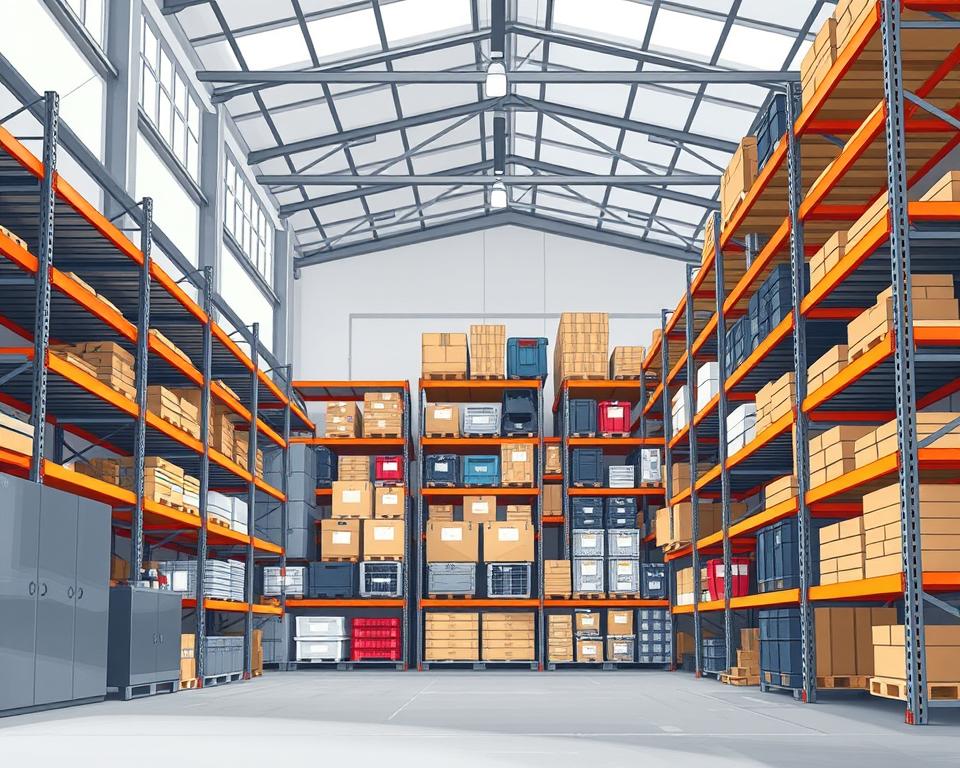
Defining Layout Design and Aisle Marking
Double-check measurements, then mark. Mark column positions with chalk, keeping aisles at ~48 inches for standard trucks. Consider pallet sizes—large Euro pallets may require ~54-inch clearances.
Use vertical space wisely, avoiding blockage of sprinklers or panels. Keep future expansion zones accessible. Good planning cuts backtracking and can increase workflow efficiency by about 18%.
Strong Foundations via Proper Assembly
Efficient storage systems depend on precise assembly. Three critical phases transform individual parts into a unified structure: vertical supports, cross-bracing, and fastener optimization.
Upright Frames & Baseplate Installation
Uprights create the skeletal framework of the rack system. Laser-leveled uprights preserve alignment. Baseplates anchor these columns to the floor, distributing weight across concrete surfaces.
Singapore’s humid climate demands corrosion-resistant materials. Set upright spacing to fit standard pallet widths and permit airflow.
Integrating Diagonal and Horizontal Profiles
Cross-bracing elements combat lateral forces during loading operations. Diagonal profiles connect uprights at 45-degree angles, creating https://www.ntlstorage.com/forklift-safety-around-racking-systems-complete-guide/ triangular stability points. Horizontal beams span columns to create pallet-bearing levels.
The combined system controls sway. Properly spaced profiles enable forklifts to maneuver without collisions.
Securing Connections with Nuts, Bolts, and Fixings
Use high-grade fasteners to lock the structure in place. Torque wrenches ensure bolts meet manufacturer specifications—under-tightened connections risk gradual loosening under vibration.
Regular inspections verify joint integrity. Galvanized hardware helps resist moisture in tropical conditions.
Pro Tips for Installing Industrial Racking
Good preparation separates smooth installs from costly delays. PMs stress three essentials: strategic tool choice, staged assembly, and ongoing quality checks. These elements work together to maintain safety standards while meeting tight deadlines.
Choose the Right Tools & Equipment
Forklifts prove indispensable for lifting upright frames into position. Scissor lifts provide secure elevated access points for connecting overhead beams. Use impact drivers for speed and lasers for alignment.
Lifting clamps prevent component damage during positioning. Digital torque wrenches verify specification-compliant tightness. Have tapes/chalk accessible to support rapid re-marking.
Step-by-Step Assembly Procedures
Start by sorting parts per the layout drawings. Anchor baseplates early, verifying anchors at ~10-foot intervals. Build vertical frames in pairs, then add crossbeams.
Install load beams at measured intervals, verifying level placement with each addition. Maintain adequate gaps between shelves and sprinklers. Load-test completed bays before putting them into service.
Experienced teams complete one bay fully before moving downstream. This helps catch errors early and prevents replication across the area.
Managing Challenges While Ensuring Safety
Uneven surfaces plague many storage facilities, creating unexpected hurdles during setup. Balancing these obstacles with strict safety compliance forms the core of successful operations.
Fixing Floor Irregularities with Shims
Concrete slabs rarely stay perfectly flat over time. Older Singapore facilities may have warped slabs that need correction. Thin metal plates called shims become essential tools here.
Shims are stacked beneath footplates to correct gaps. Several NTL Storage shims can be required for true level. Precise measurement keeps weight evenly distributed across supports.
Adhering to OSHA Standards and Safety Best Practices
Worker protection guides every setup phase. Hard hats and steel-toed boots form the first defense against accidents. OSHA mandates 36-inch minimum aisle widths for emergency access.
Focus on three critical compliance areas:
- Post load-capacity labels on every rack section
- Monthly checks of anchor bolt integrity
- Maintain clear access paths near electrical panels
Conduct regular stability checks to avoid overload risks. Record every adjustment to preserve audit-ready documentation. Proper alignment keeps inventory secure and staff protected through decades of use.
Conclusion
Start operational optimisation by focusing on structural integrity. Alignment between structure and operations yields durable efficiency gains. Installation quality drives safety and capacity utilisation for decades.
Successful projects balance engineering precision with workflow demands. Expert teams account for pallet specifications and beam placements while maintaining compliance with regional safety codes. This reduces long-term maintenance and boosts vertical capacity where space is tight, like Singapore.
Seasoned professionals bring critical insights to complex layouts. Their expertise ensures load requirements are met without sacrificing access. Ongoing audits keep the system reliable as operations grow.
Ultimately, well-executed racking configurations create safer workplaces while supporting business growth. The right combination of planning and expertise transforms storage areas into strategic assets that adapt to evolving industry demands.