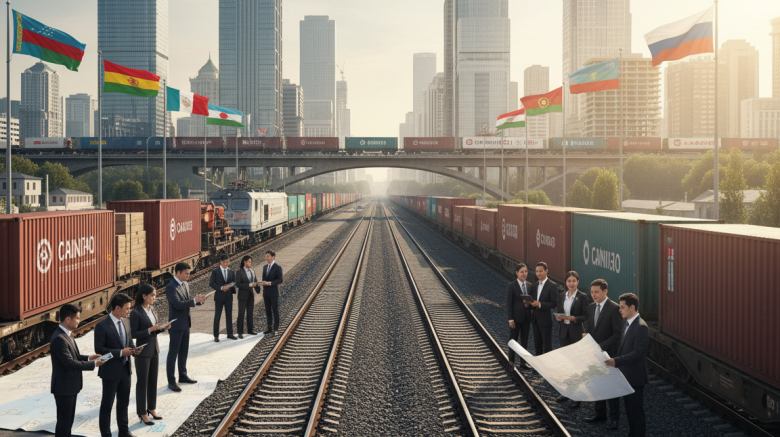
Were you aware that over the past decade, a remarkable 77,000 freight trains have crossed a critical corridor, transporting goods valued at more than $340 billion? This impressive figure highlights the powerful impact of the overland freight network joining Asian cities with European markets.
Introduced in 2013 as part of a larger initiative, this service has developed into a critical artery for international trade. It links over 200 cities across Europe, reworking economic dynamics across the route. The rapid transit time—reducing from 40 days by sea to just 15 days by rail—proves its speed.
This article looks at the wide-ranging impacts on surrounding nations, centering on economic growth, logistics, and infrastructure development. The rail route serves not only as a bridge between two regions but also as a spark for change in transit nations like Kazakhstan and Poland.
As we delve deeper, we will review the origins, routes, and operational advantages of this freight network. Grasping these elements is essential for grasping how it affects trade flows and strengthens supply chain resilience in various countries.
China To Europe Train
Belt And Road Unimpeded Trade
BRI Overseas Enterprises
- This rail freight corridor has moved 77,000 trains moving goods worth $340 billion.
- The route joins over 200 cities, significantly impacting international trade.
- The transit time is cut from 40 days by sea to just 15 days by rail.
- Nearby transit nations experience economic gains and improved logistics.
- This network is essential during global disruptions, creating reliable alternatives.
Understanding The China Rail Freight Link To European Markets: An In-Depth Overview
In the past ten years, thousands of freight trains have journeyed through a key trade route, transporting goods worth over $340 billion. This corridor has its roots in the historic Silk Road, functioning as a modern “Iron Camel Caravan” that renews ancient trade connections between East and West.
The initial service, known as “Chongqing-New Europe,” began its inaugural journey on March 19, 2011. This train traveled an remarkable 11,000 kilometers from Chongqing to Duisburg, Germany. It dramatically cut the transit time from 40 days by sea to just 15 days by rail.
This railway express evolved from a single experimental route into a cornerstone of the Belt and Road Initiative, officially launched in 2013. Under President Xi Jinping’s vision, the project has seen rapid growth over the years. From just 40 trains in its first year, the network expanded to 30 trains per week by 2018, and by 2023, it had run over 77,000 trains, carrying 50,000 varieties of goods across 53 categories.
What makes this freight route significant? It offers a faster, more reliable alternative to ocean freight, especially for time-sensitive goods like electronics, vehicles, and auto parts. The significance for surrounding countries is immense, as the railway crosses multiple transit nations, generating economic opportunities and infrastructure development along the entire route.
The Belt Road Initiative has changed this project from a bilateral link into a multilateral network. Now, 112 Chinese cities link to over 200 European cities, building a web of trade and transport.
In the end, the China-Europe railway express is far beyond a logistics project. It acts as a strategic economic artery that reconfigures trade patterns and influences the development trajectories of surrounding nations.
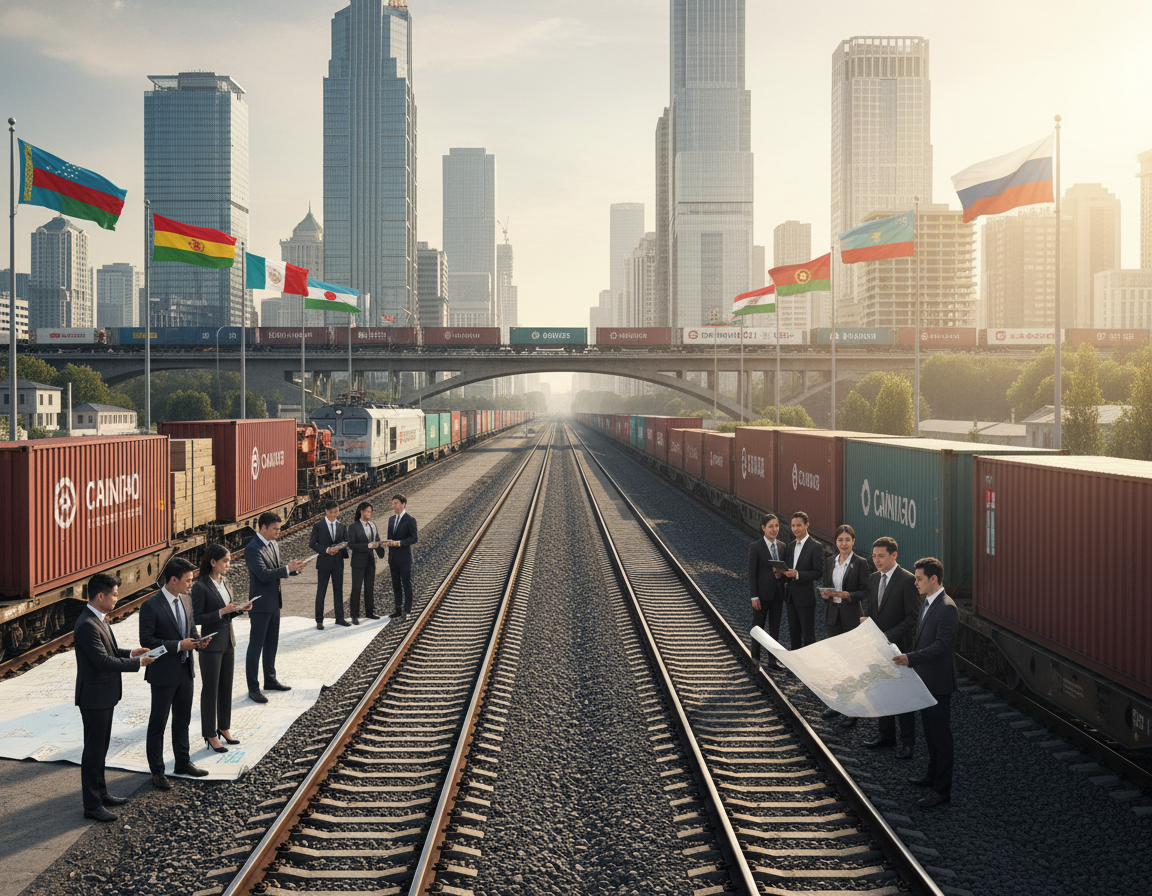
Routes And Logistics Hubs Of The China Rail Freight Network To Europe
Across the past decade, a network of freight trains has changed trade routes, transporting billions in goods across borders. This railway express uses three primary corridors, each serving distinct purposes and regions. Mapping these routes is necessary for seeing the full impact of this logistics network on surrounding countries.
The Three Main Corridors Reviewed
The Eastern Corridor exits through Manzhouli in Inner Mongolia. It passes through Russia before entering Europe via Belarus and Poland. This route primarily serves coastal exports from cities like Yiwu, which makes it vital for trade. The Central Corridor, on the other hand, enters Mongolia through Erenhot, passing through Russia to reach both eastern and western Europe. It is focused on transporting goods from central China and Guangdong.
Meanwhile, the Western Corridor facilitates exports from western China through Kazakhstan. It moves into Kazakhstan via Alashankou or Khorgos, moving through Russia, Belarus, and Poland. Some trains even transit Ukraine en route to Hungary. Every one of these corridors plays a important role in strengthening trade efficiency.
Key Transit Countries: Russia, Kazakhstan, Belarus, Mongolia, And Poland In The Network
The main transit nations are central to the success of this network. Kazakhstan has developed into a vital hub, with Alashankou and Khorgos functioning as major border crossings. Russia’s Trans-Siberian Railway network has taken on renewed importance due to this express service. Belarus and Poland function as gateways to the European Union, helping expand trade.
Major Logistics Hubs Along The Corridor
A number of logistics nodes stabilize the supply chain along these routes. Cities like Chongqing, Zhengzhou, Chengdu, Xi’an, and Urumqi have evolved into aggregation centers. These hubs turn the network from a simple point-to-point operation into a sophisticated hub-to-hub system.
At these freight nodes, freight is consolidated, customs procedures are started, and cargo is moved between different rail gauges. This is important, as China uses standard gauge while Central Asia and Europe operate on broad gauge. The logistics centers in these cities have led to economic revitalization, with new warehousing facilities and service industries serving the growing rail freight traffic.
At present, the network joins over 100 Asian cities and 200 European cities, with 86 distinct routes functioning regularly. This scale of transportation infrastructure is impressive and is still widening as demand for services grows.
Overall, the routes and logistics hubs of this railway express are not fixed. They remain in motion, adapting to the increasing demand for efficient transportation of goods across borders.
Commercial And Economic Effects On Transit Countries
The previous ten years has seen a significant shift in trade patterns, with freight trains carrying billions in goods and strengthening economic connections. This corridor has increased the variety of products traded, moving from electronics to over 50,000 different items, including vehicles, clothing, food, timber, wine, and beef.
As the China-Europe railway express has matured, it has changed one-way exports into balanced bilateral trade. European products now move into Chinese markets through more than 30 dedicated import bonded stores. This shift opens new market access for European producers and increases trade flows significantly.
Increasing Trade Movement And Market Entry
Across countries along the route, the impact is substantial. For instance, Kazakhstan has built logistics parks and warehousing facilities, improving its role as a vital hub. Meanwhile, Poland has emerged as a major distribution center for Europe, leveraging its strategic location.
Industrial And Economic Development In Route Countries
Russia has gained increased utilization of its rail infrastructure, while Belarus has capitalized on its position for customs clearance services. This development has encouraged job creation and economic diversification in regions that previously leaned heavily on traditional industries.
Impacts On Customs, Shipping Costs, And Local Services
Savings for companies are meaningful. A timber company in Inner Mongolia, for example, reduces expenses by 50 CNY per tonne using rail freight instead of road transport. This equals nearly 10 million CNY in annual savings on 200,000 tonnes of cargo.
Streamlined customs processing at multiple border crossings has become critical. Transit countries are improving their customs infrastructure to streamline processes and reduce transit time. Local services, such as freight forwarding and logistics, have grown in hub cities along the route, generating employment opportunities.
Even though rail shipping is more expensive than sea options, it remains approximately one-fifth the cost of air freight. This positioning has changed cost calculations for businesses in surrounding countries, making rail a viable alternative.
The Belt Road Initiative has amplified these economic impacts, positioning the corridor as a catalyst for development. Duisburg, Germany, has developed into a “China City,” with logistics centers processing thousands of trains annually. Similarly, Malaszewicze in Poland has emerged as one of the busiest rail freight terminals in Europe.
To sum up, the economic ripple effects of the China-Europe railway reach further than direct trade. It has encouraged industrial parks, special economic zones, and service industries in every transit nation it touches.
Practical Advantages And Global Role In Global Supply Chains
In recent years, the rapid development of this overland transport route has reshaped international trade dynamics. The China-Europe railway express has developed into a key player in logistics, delivering significant advantages over traditional sea and air freight.
Competitive Edge Over Maritime And Air Freight In Efficiency And Pricing
The rail cargo service completes journeys in about 12 days. In contrast, sea transport typically takes 35 to 45 days. This notable efficiency makes rail a attractive option for time-sensitive cargo.
Moreover, the costs associated with rail freight are much reduced. Transportation by rail is approximately one-fifth the cost of air freight, positioning it as an attractive choice for high-value goods such as electronics and vehicles.
Environmental Benefits And Environmental Considerations
Another important factor is the environmental impact. The average carbon emissions from this railway service are one-fifteenth of those from air transport and one-seventh of road transport. This aligns with global sustainability goals and attracts environmentally conscious shippers.
Reaction To Worldwide Disruptions: Pandemic And Red Sea Crisis Case Studies
The coronavirus pandemic showcased the strategic importance of this freight corridor. When traditional shipping routes experienced severe disruptions, the China-Europe railway express became a lifeline, achieving a 26.3% growth in transport volume and delivering nearly 15 million pieces of anti-epidemic materials to European nations.
In the same way, during the Red Sea crisis, Chinese exporters shifted toward this service to avoid the high operational costs of rerouting around the Cape of Good Hope. These scenarios demonstrate the railway’s role as a stabilizing force in global supply chains.
Rail performance gains have also been substantial. The maximum load capacity of a single freight train rose from 2,500 to 3,000 tonnes in early 2023. With five routes now operating on pre-scheduled timetables, the service has opened 80 routes with enhanced reliability.
Corridor countries like Kazakhstan, Russia, and Poland gain substantially from this strategic role. They have become indispensable links in a supply chain that remained dependable when maritime routes faltered. The diversity of cargo transported has also increased, with products ranging from mobile phones to 50,000 different types of goods.
To conclude, the operational advantages of the China-Europe railway express—speed, cost-efficiency, environmental sustainability, and reliability during crises—make it an increasingly vital component of global logistics strategy.
| Shipping Mode | Transit Time | Cost Comparison | Carbon Emissions |
|---|---|---|---|
| Rail Cargo | About 12 days | One-Fifth Of Air Freight | One-Fifteenth Of Air Transport |
| Maritime Transport | 35-45 days | Comparable Benchmark | Lower Than Road Transport |
| Air Freight | 3-5 days | Five Times Rail Freight | Baseline |
Issues Affecting The China-Europe Railway Express And Future Outlook
The global freight environment is shifting, revealing both opportunities and challenges for the railway corridor connecting Asia and Europe. As geopolitical tensions increase, this network faces several significant hurdles that could influence its effectiveness and growth.
One major concern is the geopolitical risks associated with passing through numerous countries. This vulnerability renders the corridor susceptible to political tensions, sanctions, and regional conflicts. Any disruption can interrupt the flow of freight, causing delays and increased costs.
Geopolitical Risks And Border Bottleneck Problems
A further serious concern is border congestion. Strict customs clearance procedures at multiple crossings produce bottlenecks. These challenges have worsened since the COVID-19 pandemic, as increased security protocols and health measures have slowed down transit times.
Reliability, Financial Viability, And Infrastructure Constraints
Reliability is also a concern. The corridor primarily serves westbound exports from China, leading to many empty trains returning home. This inefficiency pushes up operational costs and raises questions about the long-term sustainability of the project.
Beyond that, the profitability of the China-Europe railway express has heavily relied on government subsidies since its inception. Without continued state support, the project’s financial viability may be at risk.
Physical network constraints further complicate matters. The differing rail gauges between regions require time-consuming transloading at border hubs. Some routes also face shortages in the capacity to handle growing volumes of cargo, limiting expansion efforts.
Scope For Expansion And Stability Amid Changing Global Trade Patterns
Despite these challenges, there is potential for expansion. New routes are being created, and five routes now operate with pre-scheduled timetables. The diversity of goods transported is still increasing, suggesting room for growth if these challenges are addressed.
Across the opening eight months of 2023, freight train trips reached 10,575, showing a 5% year-on-year increase. This statistic underscores the ongoing demand for services despite operational hurdles.
As global trade patterns shift toward regionalization and supply chain diversification, the China-Europe railway express must adjust. The corridor’s future stability will depend on how effectively it manages these changes.
In conclusion, while geopolitical risks, congestion, and profitability concerns remain significant, the demonstrated value of the Belt Road Initiative suggests that this railway express will keep developing. Surrounding countries will play an increasingly important role in guiding its trajectory.
| Obstacle | Explanation | Impact |
|---|---|---|
| Political Tensions | Vulnerability to political tensions and regional conflicts | Interrupts cargo movement and raises expenses |
| Cross-Border Delays | Strict customs procedures causing bottlenecks | Lengthens journeys and reduces efficiency |
| Service Reliability Problems | Uneven cargo movement causing return inefficiencies | Raises expenses and pressures long-term viability |
| Infrastructure Limitations | Transloading needs and capacity restrictions | Limits scale and operational speed |
Closing Summary
Recent years has seen a major transformation through the freight corridor, which has completed 77,000 trains, transporting goods valued at over $340 billion. This modern Silk Road has reworked trade, logistics, and economic development across Eurasia.
Through 86 routes connecting over 200 cities, this network has developed beyond a single experimental train in 2011 into a comprehensive transportation system. It now completes journeys in approximately 12 days, providing a viable alternative to traditional sea and air freight.
What originally functioned as a one-way export channel has changed into balanced bilateral trade, supporting producers and consumers in all countries along the route. Transit nations like Kazakhstan, Russia, Belarus, Mongolia, and Poland have grown into vital logistics hubs, improving their economies through infrastructure and services.
Even though problems including geopolitical risks and congestion persist, the resilience demonstrated by the corridor—shown through 10,575 trips in the first eight months of 2023—points to a promising future. As global supply chains change, this network is likely to hold an even greater role in international trade.
Grasping the value of this rail corridor is essential for anyone involved in trade and logistics. It is much more than a train service; it is a powerful force reshaping the economic landscape of Eurasia.
Related: Executive Transportation Near Me Wheat Ridge for Trade Shows